The story so far
Field notes from building it
AEGIS was two rewrites in before any of this, and private for most of its life. These are notes from the build — and from the ten days of turning something that worked for me into something you can fork.
AEGIS Is Open Source
Three months ago I wrote about my personal AI orchestration system and ended with a section titled 'Why It's Not Open Source Yet.' That's fixed. AEGIS is on GitHub, MIT-licensed — here's what it actually took to get there.
Behavior Is Data, Not Code
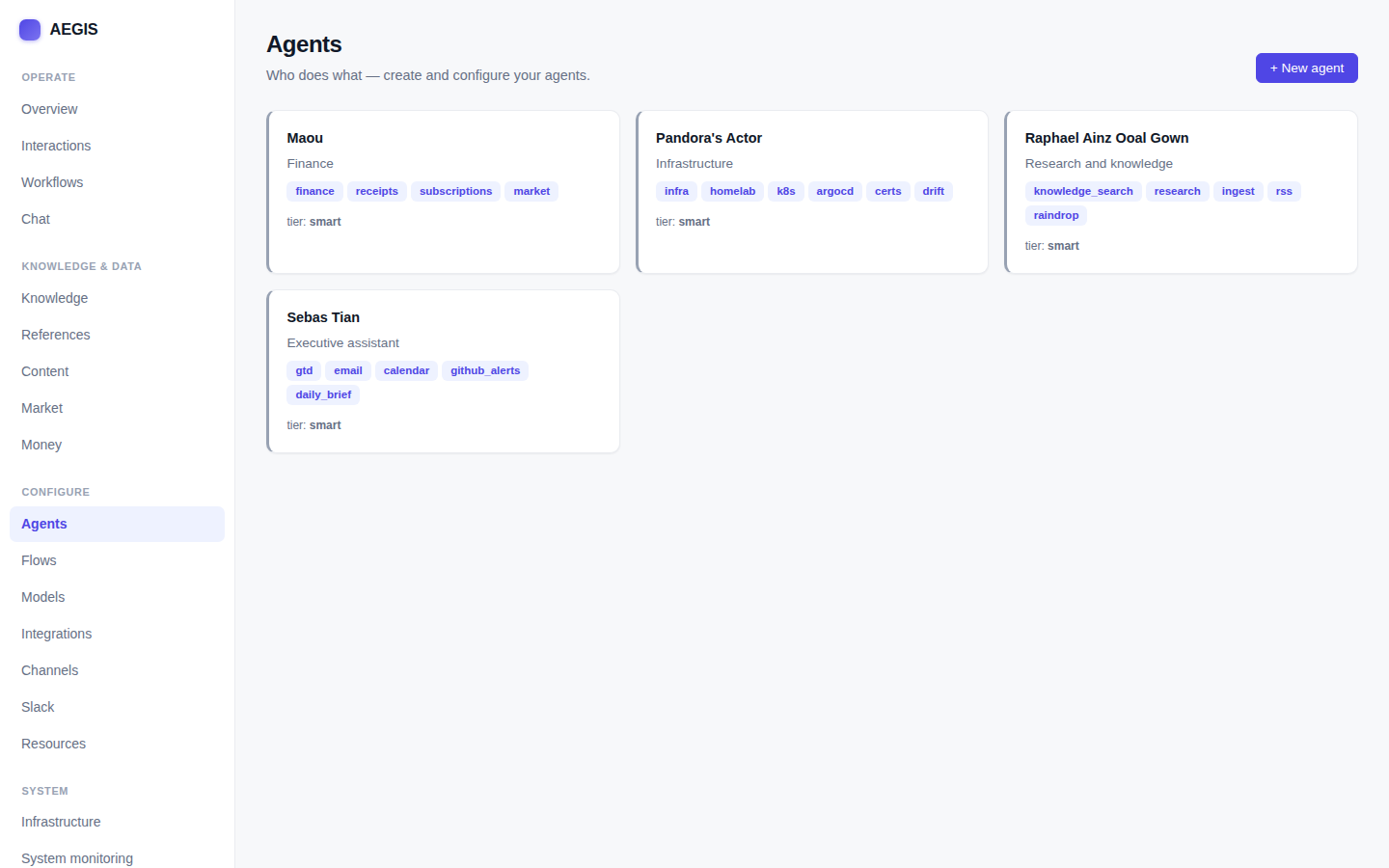
The biggest refactor of the AEGIS open-sourcing sprint: removing every branch on an agent's identity so behavior lives in the database as capability tags — resolved at runtime, edited from a UI, and safe even when a tag has no owner.
A To-Do Is a Tweet: Social Publishing With Approval Cards
Scheduling a social post doesn't need a new UI. A to-do already has copy, a time, and labels — so in AEGIS, a Todoist task with a publish label is a scheduled post, and nothing goes out until a card in chat gets a human tap.
Bring Your Own Cloud: The Infrastructure Registry
For a self-hosted system that's meant to be forked, there's exactly one honest way to handle infrastructure credentials: the user brings their own, the system stores them encrypted, and nothing in the code assumes a vendor. Here's how AEGIS got there — and what it cost me to cut my own vendors out.
Labels, Not Projects: Rethinking GTD
The day Next and Someday stopped being Todoist projects and became labels — and why that small modelling decision is what made AEGIS's GTD layer, and its bidirectional sync, actually work.
Day One of Opening the Box
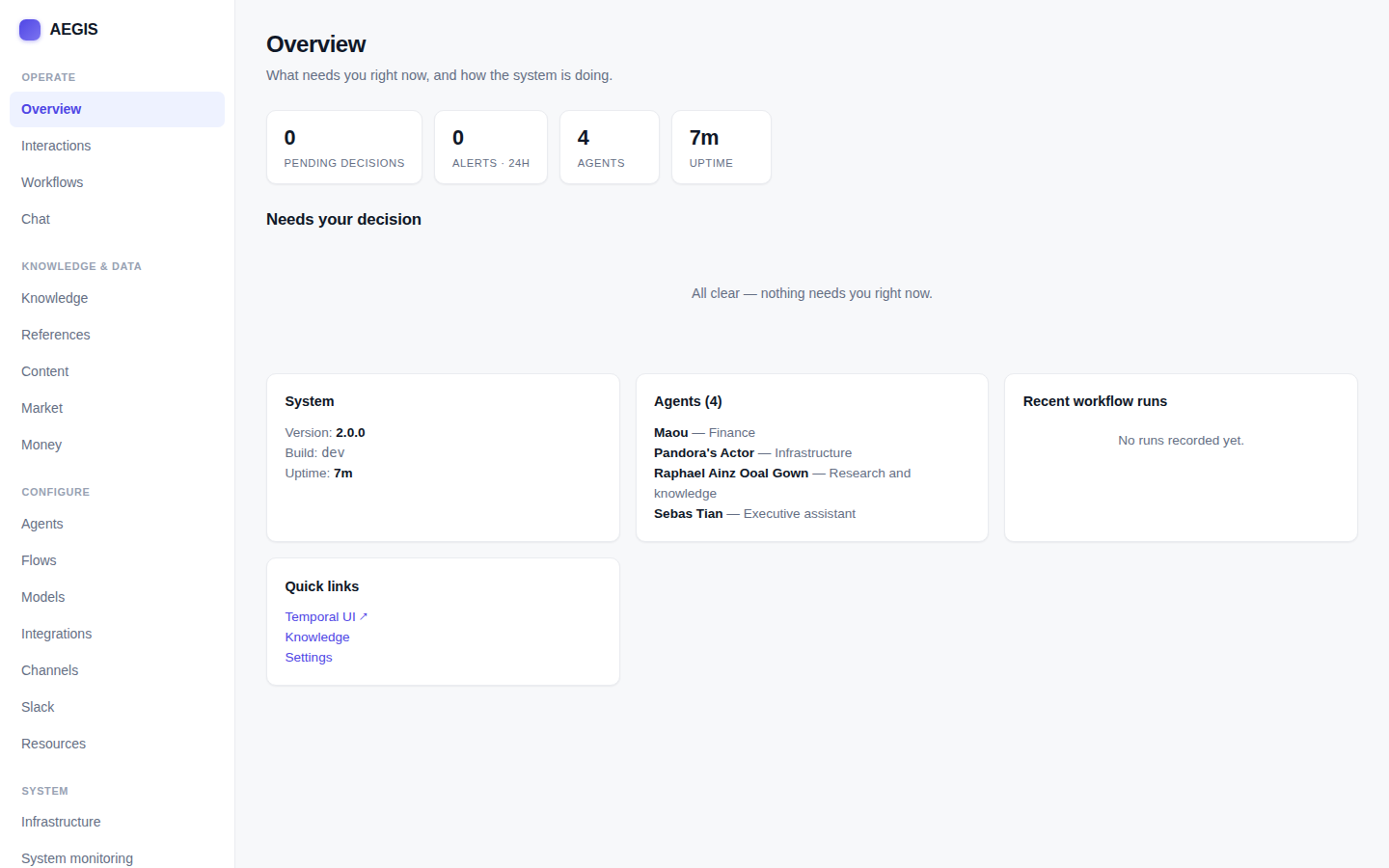
AEGIS is going open source, and today the first public commits landed. Day one of turning a private system into a shippable one: twenty-seven migrations squashed into a baseline, credentials evicted from the build, and an admin panel redesigned around decisions.
When the Bot Learns to Stay Quiet
AEGIS watches my homelab and GitHub, but the interesting part is what happens between an alert firing and me hearing about it. Most of the time, the correct answer is nothing.
One Primitive for Every Interruption
The design decision in AEGIS I'm proudest of isn't an agent or a model — it's a single interactions primitive. How one Postgres table, five kinds of card, and a Temporal workflow replaced every per-domain approval pattern.
Meet AEGIS: My Weird Little Operating Layer
Every week there’s another agent demo, another workflow canvas, another pitch about software running software for us. OpenClaw, browser agents, Zapier, n8n, Claude Code, MCP s